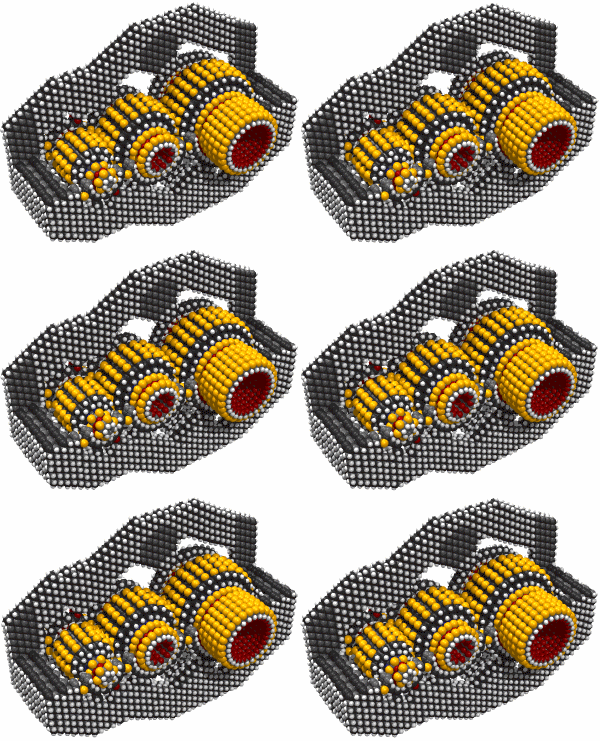
A basic definition: Nanotechnology is the engineering of functional systems at the molecular scale. This covers both current work and concepts that are more advanced.
In its original sense, 'nanotechnology' refers to the projected ability to construct items from the bottom up, using techniques and tools being developed today to make complete, high performance products.
What is Nanotechnology ?
Molecular electronics

Molecular electronics (sometimes called moletronics) is an interdisciplinary theme that spans physics, chemistry, and materials science. The unifying feature of this area is the use of molecular building blocks for the fabrication of electronic components, both passive (e.g. resistive wires) and active (e.g transistors). The concept of molecular electronics has aroused much excitement both in science fiction and among scientists due to the prospect of size reduction in electronics offered by molecular-level control of properties. Molecular electronics provides a means to extend Moore's Law beyond the foreseen limits of small-scale conventional silicon integrated circuits.
Molecular nanotechnology

These seek to develop components of a desired functionality without regard to how they might be assembled.
• Molecular electronics seeks to develop molecules with useful electronic properties. These could then be used as single-molecule components in a nanoelectronic device. For an example see rotaxane.
• Synthetic chemical methods can also be used to create synthetic molecular motors, such as in a so-called nanocar.
These subfields seek to anticipate what inventions nanotechnology might yield, or attempt to propose an agenda along which inquiry might progress. These often take a big-picture view of nanotechnology, with more emphasis on its societal implications than the details of how such inventions could actually be created.
• Molecular nanotechnology is a proposed approach which involves manipulating single molecules in finely controlled, deterministic ways. This is more theoretical than the other subfields and is beyond current capabilities.
• Nanorobotics centers on self-sufficient machines of some functionality operating at the nanoscale. There are hopes for applying nanorobots in medicine [3][4][5], but it may not be easy to do such a thing because of several drawbacks of such devices [6][7]. Nevertheless, progress on innovative materials and methodologies has been demonstrated with some patents granted about new nanomanufacturing devices for future commercial applications, which also progressively helps in the development towards nanorobots with the use of embedded nanobioelectronics concept[8].
• Programmable matter based on artificial atoms seeks to design materials whose properties can be easily and reversibly externally controlled.
• Due to the popularity and media exposure of the term nanotechnology, the words picotechnology and femtotechnology have been coined in analogy to it, although these are only used rarely and informally.
nanoelectromechanical system

These seek to create smaller devices by using larger ones to direct their assembly.
•Many technologies descended from conventional solid-state silicon methods for fabricating microprocessors are now capable of creating features smaller than 100 nm, falling under the definition of nanotechnology. Giant magnetoresistance-based hard drives already on the market fit this description, [2] as do atomic layer deposition (ALD) techniques.
•Solid-state techniques can also be used to create devices known as nanoelectromechanical systems or NEMS, which are related to microelectromechanical systems or MEMS.
•Atomic force microscope tips can be used as a nanoscale "write head" to deposit a chemical on a surface in a desired pattern in a process called dip pen nanolithography. This fits into the larger subfield of nanolithography.
DNA Nanotechnology

Bottom-up approaches
These seek to arrange smaller components into more complex assemblies.
•DNA Nanotechnology utilises the specificity of Watson-Crick basepairing to construct well-defined structures out of DNA and other nucleic acids.
•More generally, molecular self-assembly seeks to use concepts of supramolecular chemistry, and molecular recognition in particular, to cause single-molecule components to automatically arrange themselves into some useful conformation.
Nanomaterials
This includes subfields which develop or study materials having unique properties arising from their nanoscale dimensions.
• Colloid science has given rise to many materials which may be useful in nanotechnology, such as carbon nanotubes and other fullerenes, and various nanoparticles and nanorods.
• Nanoscale materials can also be used for bulk applications; most present commercial applications of nanotechnology are of this flavor.
• Progress has been made in using these materials for medical applications; see Nanomedicine.
Molecular nanotechnology
Molecular nanotechnology, sometimes called molecular manufacturing, is a term given to the concept of engineered nanosystems (nanoscale machines) operating on the molecular scale. It is especially associated with the concept of a molecular assembler, a machine that can produce a desired structure or device atom-by-atom using the principles of mechanosynthesis. Manufacturing in the context of productive nanosystems is not related to, and should be clearly distinguished from, the conventional technologies used to manufacture nanomaterials such as carbon nanotubes and nanoparticles.
When the term "nanotechnology" was independently coined and popularized by Eric Drexler (who at the time was unaware of an earlier usage by Norio Taniguchi) it referred to a future manufacturing technology based on molecular machine systems. The premise was that molecular-scale biological analogies of traditional machine components demonstrated molecular machines were possible: by the countless examples found in biology, it is known that billions of years of evolutionary feedback can produce sophisticated, stochastically optimised biological machines. It is hoped that developments in nanotechnology will make possible their construction by some other means, perhaps using biomimetic principles.  However, Drexler and other researchers have proposed that advanced nanotechnology, although perhaps initially implemented by biomimetic means, ultimately could be based on mechanical engineering principles, namely, a manufacturing technology based on the mechanical functionality of these components (such as gears, bearings, motors, and structural members) that would enable programmable, positional assembly to atomic specification (PNAS-1981). The physics and engineering performance of exemplar designs were analyzed in Drexler's book Nanosystems. But Drexler's analysis is very qualitative and does not address very pressing issues, such as the "fat fingers" and "Sticky fingers" problems. In general it is very difficult to assemble devices on the atomic scale, as all one has to position atoms are other atoms of comparable size and stickyness.
Another view, put forth by Carlo Montemagno, is that future nanosystems will be hybrids of silicon technology and biological molecular machines. Yet another view, put forward by the late Richard Smalley, is that mechanosynthesis is impossible due to the difficulties in mechanically manipulating individual molecules. This led to an exchange of letters in the ACS publication Chemical & Engineering News in 2003.
Though biology clearly demonstrates that molecular machine systems are possible, non-biological molecular machines are today only in their infancy. Leaders in research on non-biological molecular machines are Dr. Alex Zettl and his colleagues at Lawrence Berkeley Laboratories and UC Berkeley. They have constructed at least three distinct molecular devices whose motion is controlled from the desktop with changing voltage: a nanotube nanomotor, a molecular actuator, and a nanoelectromechanical relaxation oscillator. An experiment indicating that positional molecular assembly is possible was performed by Ho and Lee at Cornell University in 1999. They used a scanning tunneling microscope to move an individual carbon monoxide molecule (CO) to an individual iron atom (Fe) sitting on a flat silver crystal, and chemically bound the CO to the Fe by applying a voltage
Implications of nanotechnology
Due to the far-ranging claims that have been made about potential applications of nanotechnology, a number of concerns have been raised about what effects these will have on our society if realized, and what action if any is appropriate to mitigate these risks. Short-term issues include the effects that widespread use of nanomaterials would have on human health and the environment. 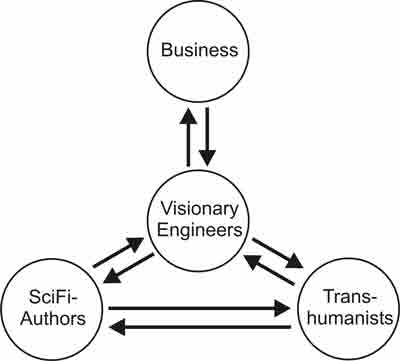 Longer-term concerns center on the implications that new technologies will have for society at large, and whether these could possibly lead to either a post scarcity economy, or alternatively exacerbate the wealth gap between developed and developing nations
Nanoengineering
Nanoengineering is the practice of engineering on the nanoscale. It derives its name from the nanometre, a unit of measurement equalling one billionth of a meter.Nanoengineering is closely related to nanotechnology.
Techniques
• Photolithography - Using light to produce patterns in chemicals, and then etching to expose the surface.
• Electron beam lithography - Similar to photolithography, but using electron beams instead of light.
• Scanning tunneling microscope (STM) - Can be used to both image, and to manipulate structures as small as a single atom.
• Molecular self-assembly - Arbitrary sequences of DNA can now be synthesized cheaply in bulk, and used to create custom proteins or regular patterns of amino acids. Similarly, DNA strands can bind to other DNA strands, allowing simple structures to be created.
Fullerenes
The fullerenes are allotropes of carbon named after the scientist and architect Richard Buckminster "Bucky" Fuller, which were relatively recently discovered, in 1985, by a team of scientists from Rice University and the University of Sussex, three of whom were awarded the 1996 Nobel Prize in Chemistry. They are molecules composed entirely of carbon, which take the form of a hollow sphere, ellipsoid, or tube. Spherical fullerenes are sometimes called buckyballs, while cylindrical fullerenes are called buckytubes or nanotubes.
As of the early twenty-first century, the chemical and physical properties of fullerenes are still under heavy study, in both pure and applied research labs. In April 2003, fullerenes were under study for potential medicinal use — binding specific antibiotics to the structure to target resistant bacteria and even target certain cancer cells such as melanoma.
Fullerenes are similar in structure to graphite, which is composed of a sheet of linked hexagonal rings, but they contain pentagonal (or sometimes heptagonal) rings that prevent the sheet from being planar.
Fundamentals of Nanotechnology
Aggregated diamond nanorods, or ADNRs, are an allotrope of carbon believed to be the least compressible material known to humankind, as measured by its isothermal bulk modulus; aggregated diamond nanorods have a modulus of 491 gigapascals (GPa), while a conventional diamond has a modulus of 442 GPa. ADNRs are also 0.3% denser than regular diamond. The ADNR material is also harder than type IIa diamond and ultrahard fullerite.
Carbon nanofoam is the fifth known allotrope of carbon discovered in 1997 by Andrei V. Rode and co-workers at the Australian National University in Canberra. It consists of a low-density cluster-assembly of carbon atoms strung together in a loose three-dimensional web.
Each cluster is about 6 nanometers wide and consists of about 4000 carbon atoms linked in graphite-like sheets that are given negative curvature by the inclusion of heptagons among the regular hexagonal pattern. This is the opposite of what happens in the case of buckminsterfullerenes, in which carbon sheets are given positive curvature by the inclusion of pentagons.
The large-scale structure of carbon nanofoam is similar to that of an aerogel, but with 1% of the density of previously produced carbon aerogels - only a few times the density of air at sea level. Unlike carbon aerogels, carbon nanofoam is a poor electrical conductor.
Carbon NanoBuds are a newly discovered allotrope of carbon in which fullerene like "buds" are covalently attached to the outer sidwalls of the carbon nanotubes. This hybrid material has useful properties of both fullerenes and carbon nanotubes. In particular, they have been found to be exceptionally good field emitters.
Carbon Nanotubes

Carbon Nanotubes: Overview
What is a carbon nanotube
Methods of producing nanotubes
Global Trends and Issues
Global leaders
Regional leaders
Application Developments, Applied Industries and
Commercialization Drivers
Conductive polymer composites
Electromechanical devices
Field emission devices
Nanometer-size electronic devices
Sensors and probes
Longer-term applications
Patent and IP Trends and Issues
Key IP trends
Where itÕs headed
Nanotube patent issues
Nanotube Market and Outlook
Production capacity
Prices
Market forecasts
Nanotube market by industry
Automotive
Electronics and IT
Household/Consumer
Sporting equipment
Aerospace and defense Health/medical
Energy
Displays
Lamps
R&D
Profiles of Key Commercial Nanotube Producers
Profiles of Key Nanotube R&D Companies
Profiles of Key Academic Research Centers
Future Directions in Nanotube R&D
Emerging trends and markets
Business Opportunities
Key commercial opportunities
Conclusion
Quantum dot (Qdots)
Quantum dot (Qdots)
Nanometer sized semiconductor particles, made of cadmium selenide (CdSe), cadmium sulfide (CdS) or cadmium telluride (CdTe) with an inert polymer coating. The semiconductor material used for the core is chosen based upon the emission wavelength range being targeted: CdS for UV-blue, CdSe for the bulk of the visible spectrum, CdTe for the far red and near-infrared, with the particle’s size determining the exact color of a given quantum dot. The polymer coating safeguards cells from cadmium toxicity but also affords the opportunity to attach any variety targeting molecules, including monoclonal antibodies directed to tumor-specific biomarkers. Because of their small size, quantum dots can function as cell- and even molecule-specific markers that will not interfere with the normal workings of a cell. In addition, the availability of quantum dots of different colors provides a powerful tool for following the actions of multiple cells and molecules simultaneously.
In August 2004, researchers announced the successful preparation of water-soluble gold quantum dots that can also be constructed to emit light at a variety of wavelengths. These polymer-coated quantum dots may prove to be more suitable for use in human clinical applications.
Nanowire
A nanometer-scale wire made of metal atoms, silicon, or other materials that conduct electricity. Nanowires are built atom by atom on a solid surface, often as part of a microfluidic device. They can be coated with molecules such as antibodies that will bind to proteins and other substances of interest to researchers and clinicians. By the very nature of their nanoscale size, nanowires are incredibly sensitive to such binding events and respond by altering the electrical current flowing through them, and thus can form the basis of ultra sensitive molecular detectors.
Nanotechnology
The interactions of cellular and molecular components and engineered materials—typically clusters of atoms, molecules, and molecular fragments—at the most elemental level of biology. Such nanoscale objects—typically, though not exclusively, with dimensions smaller than 100 nanometers—can be useful by themselves or as part of larger devices containing multiple nanoscale objects.
Nanoshell

Nanoshell
A nanoparticle composed of a metallic shell surrounding a semiconductor. When nanoshells reach a target cancer cell, they can be irradiated with near-infrared light or excited with a magnetic field, either of which will cause the nanoshell to become hot, killing the cancer cell.
Nanoparticle
A nanoscale spherical or capsule-shaped structure. Most, though not all, nanoparticles are hollow, which provides a central reservoir that can be filled with anticancer drugs, detection agents, or chemicals, known as reporters, that can signal if a drug is having a therapeutic effect. The surface of a nanoparticle can also be adorned with various targeting agents, such as antibodies, drugs, imaging agents, and reporters. Most nanoparticles are constructed to be small enough to pass through blood capillaries and enter cells.
Nanometer
A unit of spatial measurement that equals one-billionth (10 -9) of a meter. The head of a pin is about 1 million nanometers across. A human hair is about 60,000 nanometers in diameter, while a DNA molecule is between 2-12 nanometers wide.
Nanocantilever
The simplest micro-electro-mechanical system (MEMS) that can be easily machined and mass-produced via the same techniques used to make computer chips. The ability to detect extremely small displacements make nanocantilever beams an ideal device for detecting extremely small forces, stresses and masses. Nanocantilevers coated with antibodies, for example, will bend from the mass added when substrate binds to its antibody, providing a detector capable of sensing the presence of single molecules of clinical importance.
Microfluidics
A multidisciplinary field comprising physics, chemistry, engineering and biotechnology that studies the behavior of fluids at volumes thousands of times smaller than a common droplet. Microfluidic components form the basis of so-called “lab-on-a-chip” devices that can process microliter and nanoliter volumes and conduct highly sensitive analytical measurements. The fabrications techniques used to construct microfluidic devices are relatively inexpensive and are amenable both to highly elaborate, multiplexed devices and also to mass production. In a manner similar to that for microelectronics, microfluidic technologies enable the fabrication of highly integrated devices for performing several different functions on the same substrate chip. Microfluidics is a critical component in gene chip and protein chip development efforts.
Liposome
A type of nanoparticle made of lipids, or fat molecules, surrounding a water core. Liposomes, several of which are widely used to treat infectious diseases and cancer, were the first type of nanoparticle to be used to create therapeutic agents with novel characteristics.
Imaging Contrast Agent
Imaging Contrast Agent
A molecule or molecular complex that increases the intensity of the signal detected by an imaging technique, including MRI and ultrasound. An MRI contrast agent, for example, might contain gadolinium attached to a targeting antibody. The antibody would bind to a specific target – a metastatic melanoma cell, for example – while the gadolinium would increase the magnetic signal detected by the MRI scanner.
Dendrimer
A dendrimer is a spherical, highly branched polymer molecule. Dendrimers are made from two different monomers – a reactive amine and an acrylic acid – and are assembled in discrete steps, which allow them to be constructed with an exact size that depends on the number of enlargement steps. This picture shows a dendrimer that has undergone three “generations” of enlargements.
Dendrimers are of particular interest for cancer applications because of their defined and reproducible size, but more importantly, because it is easy to add a variety of other molecules to the surface of a dendrimer. Such molecules could include tumor-targeting agents (including but not restricted to monoclonal antibodies), imaging contrast agents to pinpoint tumors, drug molecules for delivery to a tumor, and reporter molecules that might detect if an anticancer drug is working.
Carbon Nanotubes
A form of carbon related to fullerenes, except that the carbon atoms form extended hollow tubes instead of closed, hollow spheres. Carbon nanotubes can also form as a series of nested, concentric tubes. Carbon nanotubes can be used as nanometer-scale syringe needles for injecting molecules into cells and as nanoscale probes for making fine-scale measurements. Carbon nanotubes can be filled and capped, forming nanoscale test tubes or potential drug delivery devices.  Carbon nanotubes can also be “doped,” or modified with small amounts of other elements, giving them electrical properties that include fully insulating, semiconducting, and fully conducting.
Buckyball or Fullerene or C60
One of three known pure forms of carbon (graphite and diamond being the other two) that takes a spherical shape with a hollow interior. Buckyballs, named because they resemble the geodesic domes built by architect Buckminster Fuller, were discovered in 1985 among the byproducts of laser vaporization of graphite in which the carbon atoms are arranged in sheets. Though C60, referring to the number of carbon atoms that make up one sphere, is the most common fullerene, researchers have found stable, spherical carbon structures containing 70 atoms (C70), 120 (C120), 180 (C180), and others.
Robert F. Curl Jr. and Richard E. Smalley, both of Rice University in Houston, Texas and Harold W. Kroto of the University of Sussex in England, won the 1996 Nobel Prize for Chemistry for their discovery of buckminsterfullerene, the scientific name for buckyballs
Subscribe to:
Comments (Atom)